
Marathon couples therapy in Victoria — what three or five consecutive days actually involve
What the format is, where the term came from, what happens inside it, and — just as importantly — when it is the wrong thing to choose.
Tell me something about what is happening between you. You do not need to explain it well.
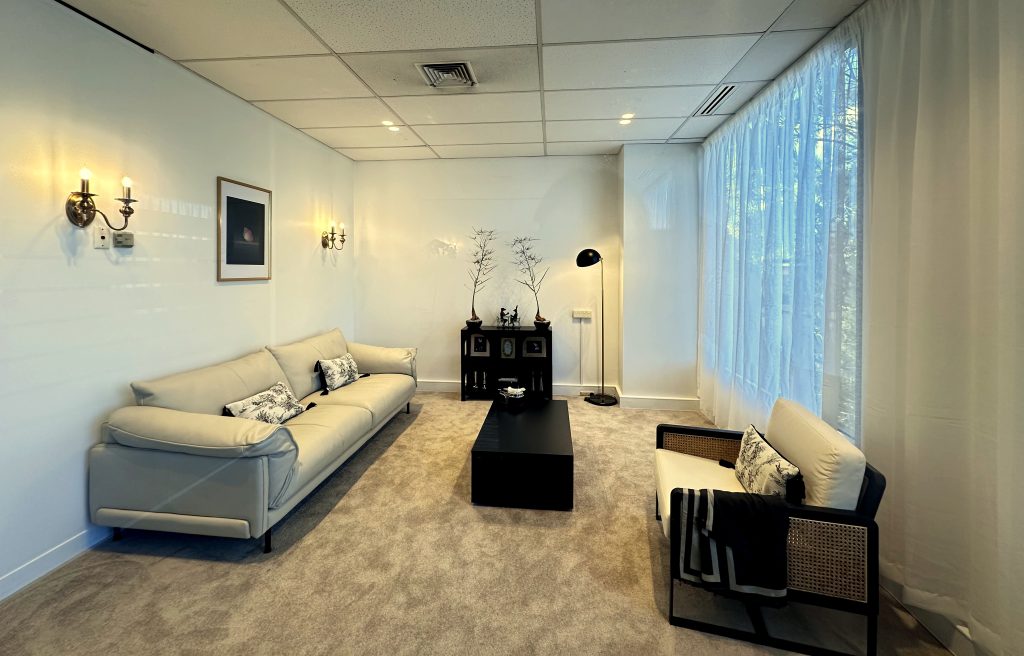
Most couples who find this page have already worked something out for themselves. An hour a week is not going to be enough. By the time the two of you have arrived, taken your coats off and found your way back into the conversation, the hour is halfway gone; and whatever was opened has to be closed again and carried home unfinished. So you have started looking for something longer, and somewhere in that search you have come across the phrase marathon couples therapy.
Where the term comes from
The word arrived in psychotherapy in the mid-1960s, when Frederick Stoller and George Bach began running time-extended group sessions in California — many hours at a stretch, on the theory that fatigue wears through the social performance people ordinarily keep up, and that something more honest appears underneath. Those early groups were long, and they were meant to be arduous. The name stuck.
What is offered in Australia today under that name has almost nothing to do with the endurance experiments of the 1960s. It has inherited only the useful part of the idea: that concentrated time changes what a conversation can reach. In current Australian usage, marathon couples therapy simply means multi-day couples work — one couple, one therapist, several consecutive days, rather than an hour a week for a year.
It is worth saying plainly that the word is a description of scheduling, not of a method. Two practices using the same word may be doing entirely different work in the room.
What Therapy Atelier calls it
This practice does not use the word marathon for its own work, and never has. The format exists here under its own name: a Couples Intensive.
If you have been searching for marathon couples therapy in Victoria, a Couples Intensive at Therapy Atelier is the thing you have been looking for. Three consecutive days, or five. Roughly five hours of therapy each day. One couple at a time, in Mornington, in Melbourne, or online.
The naming matters less than the shape, and the shape is the same. But the word is avoided here for a reason. Marathon suggests endurance, and endurance is not the mechanism. Nothing useful happens in this room because two exhausted people were kept talking past their limit. What makes the format work is continuity — and continuity is a quieter thing than a marathon.
Why consecutive days work differently from an hour a week
Weekly therapy has a structural problem that has nothing to do with the quality of the therapy. Between one session and the next, six days pass in which the ordinary life of the relationship carries on: the school run, the difficult message, the silence at dinner, the argument on Thursday that neither of you mentions. A good deal of each session is spent re-establishing where you had got to. Depth is reached, and then the week undoes some of it.
Consecutive days remove that interruption. Something surfaces on the first afternoon and is still available on the second morning. A pattern is named on Tuesday and can be watched happening in the room on Wednesday, in real time, which is a very different experience from being told about it. There is room for the conversation that neither of you has been able to have at home, because for the first time there is no clock forcing it closed and no evening waiting on the other side of it.
There is a second thing, less often said. Three days away from your own kitchen is three days away from every habit the two of you perform in it. Couples are often astonished by how differently they speak to one another in a room that belongs to neither of them.
This is not a claim that the format is superior to weekly work. It is not. It is a claim that it is different, and that for some couples at some moments the difference is decisive. For many couples, weekly ninety-minute sessions remain the better and more proportionate choice.
What actually happens across the days
Nothing begins on the first morning. It begins before that.
Both of you complete Gottman relationship assessments online, and they are read before the first day. The first morning opens with a proper conversation before any structured work, and that conversation is genuinely a two-way decision. It exists so that the shape of the work can be planned around what is actually happening between you, and so that either party — including the therapist — can say that an intensive is not the right instrument here. Couples are occasionally advised against one. That conversation is included in the fee and it is not a formality.
The days themselves combine hours with the two of you together and hours with each of you individually. Joint hours are where the work of the relationship is done. Individual hours are where a person can say the thing they have not yet been able to say in front of their partner, and be helped to find a way of bringing it into the room, or to understand why they cannot yet. The proportion is set by what the couple needs, not by a template.
The method draws on Gottman Method work, attachment theory, and depth psychology — which in practice means attending not only to how the two of you argue but to what is underneath the argument, and to the much older material each of you brought into the relationship without knowing it. Tumee Hugginson holds an MA in Clinical Psychology and Gottman Method training to Level 3, and works with couples only.
Lunch and refreshments are provided each day, which sounds like a small point and is not. Nobody should be leaving the building to find food in the middle of a day like this.
Afterwards you receive a written integration document — an account of what was found, in plain language, so that it does not evaporate in the fortnight after you go home — and two follow-up sessions, both included. The follow-ups are part of the work rather than an afterthought. What is opened in three days takes considerably longer than three days to settle.
Who this format suits
It tends to suit couples for whom weekly therapy has stalled, or has begun to feel like maintenance of a problem rather than movement through it.
It suits couples in a period of acute crisis, where the hour a week is too thin a thread and what is needed is sustained attention over a short span. It suits couples working through betrayal or a breach of trust — therapy after an affair is among the most common reasons an intensive is chosen, because the disclosure conversation in particular does not belong in a fifty-minute hour with a waiting room beyond the door.
It suits couples at a genuine turning point: a relocation, a diagnosis in the family, a decision about children, a decision about whether to continue.
And it suits couples for whom time itself is the constraint — those travelling from interstate or overseas, those whose diaries make a weekly commitment unrealistic, those who would rather clear three days than sit down every Tuesday for eight months.
Where it is not the right choice
An intensive is not appropriate where there is violence or coercive control in the relationship. This is not a matter of preference. Couples work in that context can raise risk for the person already at risk, and this practice does not undertake it.
It is not the right format where an affair is ongoing and concealed. The work depends on the room being honest, and it cannot be honest under those conditions.
It is not suitable where one partner is in acute personal crisis — untreated addiction, acute mental ill health, a level of distress that needs individual care first. Five hours a day is a demanding thing to ask of someone who is not currently able to sustain it, and asking it would not be kind.
And it is not the right choice where one of you has already decided to leave and is attending in order to say so, or to be able to say afterwards that you tried. A couple may absolutely come in undecided — ambivalence is ordinary and is not a barrier. A decision already made and not disclosed is a different matter.
If any of this describes your situation, say it when you enquire, or in the first morning’s conversation. It is far better said there than discovered on the second morning.
What an intensive cannot do
It cannot compress a decade into three days. Some things take the time they take, and there is no format that changes that.
It cannot repair a relationship one person has left. It cannot deliver a particular outcome, and no honest practitioner will tell you otherwise. Some couples finish an intensive closer than they have been in years. Some finish it with a clearer and more sorrowful understanding of what has already ended. Some finish it with useful work begun and a good deal of it still ahead. Clarity is a legitimate result of this work; so is the decision to part with more understanding and less damage than you would otherwise have managed.
What an intensive reliably offers is uninterrupted time, sustained attention and a room in which the difficult conversation can actually take place. What the two of you do with that is yours.
It is also worth being straightforward about cost. This is a considered piece of expenditure, and it is not the right first step for every couple. Some should begin weekly and see what happens.
The two formats, and what they cost
- Three days — fifteen hours — AUD 5,800.
- Five days — twenty-five hours — AUD 7,800.
Each fee includes the Gottman assessment beforehand, all therapy hours across the days, the written integration document, two follow-up sessions afterwards, and lunch and refreshments each day. There is no separate assessment charge and no follow-up charge; the figure above is the figure.
By comparison, weekly couples therapy at this practice is AUD 350 for a ninety-minute session.
Psychotherapy is GST-free. Couples therapy is not covered by Medicare in Australia; the fees page explains. Payment terms, deposits and cancellation arrangements are set out in full on the fees page.
Away from home
Some couples want the work further from their ordinary life than a consulting room in their own state allows. Retreat intensives run over five to seven days in Australia, in Japan, or at another destination by arrangement, with five to six hours of work daily and the rest of the day left deliberately open. Because the format, the duration and the setting are arranged for the particular couple, these are priced on private enquiry.
How to begin
Write, or telephone. Tell me something about what is happening between you and what you are hoping three or five days might do. You do not need to explain it well, and you do not need to have agreed with each other about it first.
I will reply personally, with an honest view of whether an intensive is the right instrument for you — and with dates, if it is. If it is, the dates are held with a deposit and you complete the assessments online before the first day.
enquire@therapyatelier.com · 03 5939 4984 · Suite 4, 346 Main Street, Mornington VIC 3931. Also in Melbourne, and online.